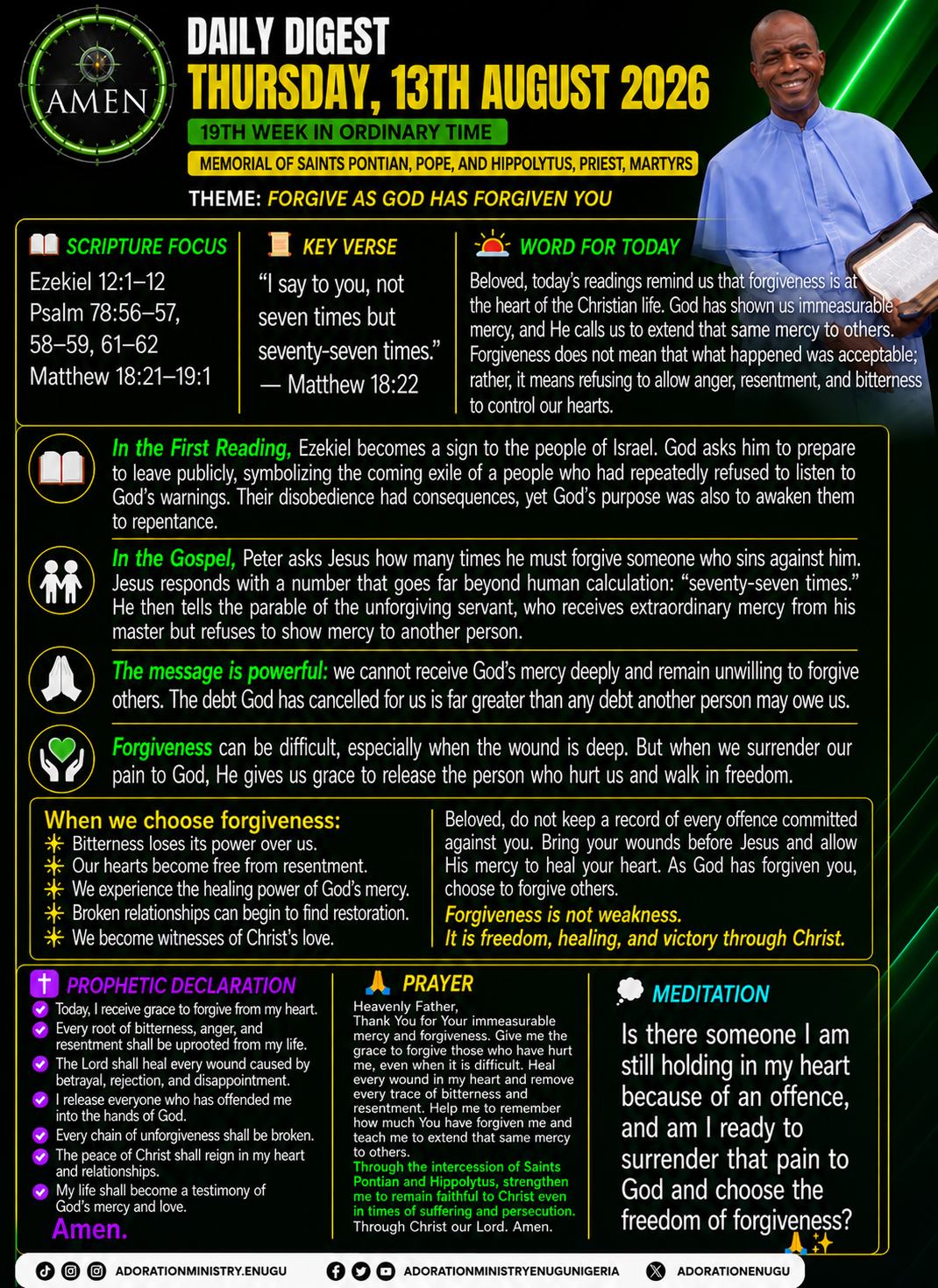
Beloved, today's readings remind us that forgiveness is at the heart of the Christian life. God has shown us immeasurable mercy, and He calls us to extend that same mercy to others. Forgiveness does not mean that what happened was acceptable; rather, it means refusing to allow anger, resentment, and bitterness to control our hearts.
In the First Reading, Ezekiel becomes a sign to the people of Israel. God asks him to prepare to leave publicly, symbolizing the coming exile of a people who had repeatedly refused to listen to God's warnings. Their disobedience had consequences, yet God's purpose was also to awaken them to repentance.
In the Gospel, Peter asks Jesus how many times he must forgive someone who sins against him. Jesus responds with a number that goes far beyond human calculation: “seventy-seven times.” He then tells the parable of the unforgiving servant, who receives extraordinary mercy from his master but refuses to show mercy to another person.
The message is powerful: we cannot receive God's mercy deeply and remain unwilling to forgive others. The debt God has cancelled for us is far greater than any debt another person may owe us.
Forgiveness can be difficult, especially when the wound is deep. But when we surrender our pain to God, He gives us grace to release the person who hurt us and walk in freedom.
When we choose forgiveness:
Bitterness loses its power over us.
Our hearts become free from resentment.
We experience the healing power of God's mercy.
Broken relationships can begin to find restoration.
We become witnesses of Christ's love.
Beloved, do not keep a record of every offence committed against you. Bring your wounds before Jesus and allow His mercy to heal your heart. As God has forgiven you, choose to forgive others.
Forgiveness is not weakness. It is freedom, healing, and victory through Christ.